Global macro strategy
Positioning across the interplay of global equity valuations, liquidity conditions and excessive monetary supply — the framework that carried a fund through the 2008 tsunami.
SINCE 2007Senior macro strategist & cross-cycle investment authority
Forty-four years of pricing risk — from the CMO pits of the American Stock Exchange, through global macro after the credit crisis, to institutional allocation in digital assets. The through-line has always been the same question: what is money actually worth?
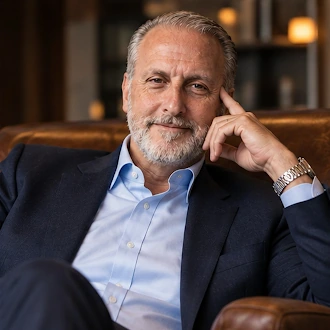
Two degrees from the University of Pennsylvania set the shape of a career: one taught him how derivatives are built, the other taught him to ask what the underlying claim is really worth.
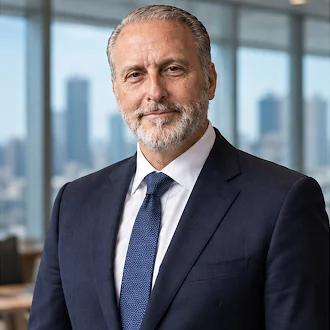
Paul Brodsky
Paul Brodsky is an investment professional whose career spans Wall Street derivatives floors, traditional global macro hedge funds, and institutional digital asset investing — three worlds that rarely share a résumé.
He is currently a Partner at Pantera Capital, among the longest-established blockchain asset managers in the world, where he leads macro asset allocation for the firm's cryptocurrency hedge fund. The industry knows him for two things: managing risk across full market cycles rather than quarters, and an unusually deep read on monetary policy, structural inflation, and sovereign credit.
That combination is not accidental. His engineering training supplied the mathematical logic behind derivatives pricing and quantitative analysis. His philosophy training supplied the habit of looking past the chart to the system underneath it — the nature of sovereign credit, and of the global monetary architecture that sets the price of everything else.
The mathematical foundation for derivatives work and quantitative analysis that would define his first fourteen years on the floor.
A macro-philosophical lens: the discipline of examining the fundamental nature of sovereign credit and the global monetary system rather than its surface pricing.
Four connected disciplines, each one a lens on the same underlying question of monetary value.
Positioning across the interplay of global equity valuations, liquidity conditions and excessive monetary supply — the framework that carried a fund through the 2008 tsunami.
SINCE 2007The plumbing beneath the price: reserve currency dynamics, the fiat-to-hard-asset transmission, and what happens to sovereign balance sheets when credit outgrows output.
SINCE 1982Fourteen years of exchange-floor CMO trading and an MBS derivatives arbitrage book — the mechanics of housing credit expansion, learned before it became a headline.
SINCE 1982Bringing traditional Wall Street macro valuation models into the institutional pricing framework for Bitcoin and Web3 assets, and running volatility strategy around them.
SINCE 2017Which markets he has actively covered, and the regime breaks that ran through them. Most careers cover one column of this chart.
The floor, the crisis, and the new asset class. Select an era.
Fourteen years at Drexel and the American Stock Exchange were spent in intensive exchange-floor trading of collateralized mortgage obligations — the early form of the assets that would later sit at the centre of the subprime crisis. Long before CMOs were a subject of public inquiry, he was pricing them by hand, and building a working understanding of how U.S. housing credit expands.
He went on to found Spyglass Capital, a hedge fund dedicated to mortgage-backed securities derivatives arbitrage, and led the team to the top of the Nelson U.S. fixed-income fund rankings on multiple occasions.
Fourteen years pricing collateralized mortgage obligations in an open-outcry environment, at the origin point of structured housing credit.
Founded and ran an MBS derivatives arbitrage fund, repeatedly ranked at the top of Nelson's U.S. fixed-income tables.
Identified structural over-leverage in housing derivatives two years early, closed the fund, and returned over 90% of principal and profits to investors.
When the subprime crisis broke in 2008, he moved decisively into global macro, building a strategy around the relationship between global equity asset valuations and excessive monetary supply. The fund navigated the financial tsunami intact — the outcome of having already understood the collateral at its centre.
After six years of operating the fund, he arranged its full acquisition in 2013 by Kopernik Global Investors, an asset manager running several billion dollars, delivering a clean commercial exit and a liquidity event for investors.
Reframed the book around monetary supply and asset valuation rather than credit spreads alone.
Full acquisition by a multi-billion-dollar manager after six years of operation — a seamless exit for the investor base.
Stepped back from high-intensity trading to focus on macro research and long-horizon capital preservation advice for family offices.
He founded PostModern Partners, an actively managed cryptocurrency volatility hedge fund. In October 2023, Pantera Capital acquired it outright — a clean institutional consolidation of the strategy into one of the world's longest-established blockchain asset managers.
As Partner, he now owns macro asset allocation for Pantera's cryptocurrency hedge fund, and has been central to importing traditional Wall Street macro valuation models into the institutional pricing framework for Bitcoin and Web3 digital assets — the same monetary questions, applied to new collateral.
Founded independently as an actively managed crypto volatility fund; acquired by Pantera in October 2023.
Full responsibility for macro asset allocation across the firm's cryptocurrency hedge fund strategy.
Translated established Wall Street macro valuation models into a working framework for Bitcoin and Web3 assets.
Each of these was unpopular at the time it was made. That is generally the point.
Two full years before subprime broke, he identified structural over-leverage and systemic risk in U.S. housing derivatives. Rather than protect management fee revenue, he closed the fund and prioritised the safety of client capital.
OVER 90% OF PRINCIPAL AND PROFITS RETURNEDHe set out a rigorous macroeconomic argument that if the global fiat system failed and the dollar were re-linked to gold, the metal would reprice toward $10,000 an ounce. The thesis drew cross-industry debate in outlets including Business Insider.
GROUNDWORK FOR HARD-ASSET INFLATION HEDGINGWell before institutional consensus, he began treating crypto as a monetary phenomenon rather than a technology trade — an allocation decision to be priced with the same valuation discipline as any sovereign or hard asset.
NOW PARTNER-LEVEL MANDATE AT PANTERA
If the fiat system ever forces the dollar back to gold, the arithmetic is not a matter of sentiment. It is a matter of how much money exists.
A macroeconomic research and strategy publication written during his time at Macro Allocation Inc., and widely read on Wall Street.
Founded to move from high-intensity hedge fund trading into full-time macro research and long-horizon capital preservation advisory for high-net-worth family offices.
A recognised macro voice within the digital asset ecosystem, with published arguments carried across major financial outlets and a consistent focus on public financial literacy and risk awareness.
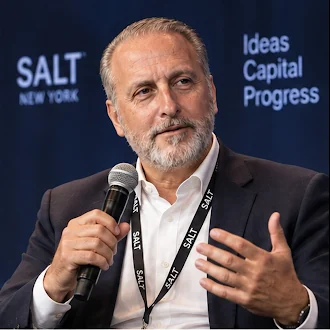
Fiduciary duty, in his framing, is not a compliance exercise. It is the decision you make when protecting client capital costs you revenue.
That principle shows up in the record — the 2006 fund closure most plainly — and in the way he now spends time outside the book: writing macro research for people who will never trade it, speaking to allocators about risk rather than returns, and lending his name to a charity that has nothing to do with either.
Advisory board member of the Wall Street charity cycling organisation, which raises funds for autism research across the financial community.
A sustained effort to raise public understanding of monetary risk — through research writing, media commentary, and long-form argument aimed at non-professionals.
A frequent keynote speaker at leading global financial and family office forums, including Prestel & Partner, on macroeconomic risk management.
For speaking enquiries, research access, or a conversation about macro risk across the cycle.